


10- MILHO DE GRILO Lantana trifolia L. (VERBENACEAE)

10 - Milho-de-grilo - Lantana trifolia L. (VERBENACEAE)
Perennial, shrubby, branched, erect, with rough leaves and branches, but without acúleo. The leaves are verticilated, with a serrated margin, elliptical and with an acute apex, with a rough texture and characteristic aroma. The flowers in groups of up to three, start from the leaf axils, having a peduncle of 4 to 6.5 cm, groups of flowers with a 1.5 mm calyx, in pink color. Round, wine-colored, hairless fruits, 0.3 cm in diameter, with a sweet taste.
Distribution: Southeast, Midwest and South, in the Cerrado and on the edges of the Atlantic Forest. It can occur as an invasive plant in agricultural regions.
Situation in São Paulo: Despite being considered as a spontaneous and ruderal plant, it is a good indicator of remaining areas of cerrado, where it is always present.
How to plant: It reproduces extremely quickly, either by branch cuttings or by seeds, and the procedures are the same as those of other lanthanes; it also behaves well in pots. It tolerates long periods of scarcity of rainfall and is not demanding about soil fertility.
Uses: Very ornamental, its distinct fruiting, from wine to purple, could be used more in urban landscaping. It is considered a medicinal and meliferous plant. It blooms and bears fruit intensely all year round; its fruits are edible and have a mildly sweet taste, but don't expect to kill hunger with them.
LORENZI, H. DANINE PLANTS IN BRAZIL: TERRESTRIAL, AQUATIC, PARASITE AND TOXIC. PLANTARUM INSTITUTE. NOVA ODESSA, SP, 4th ED. 2008. 672P. IL.
DOS SANTOS SILVA, TR; LIMA, CT FLORA OF BAHIA: VERBENACEAE: LANTANA. BIOLOGICAL SCIENCES SERIES SITIENTIBUS, V. 12, N. 2, P. 245-268, 2012.
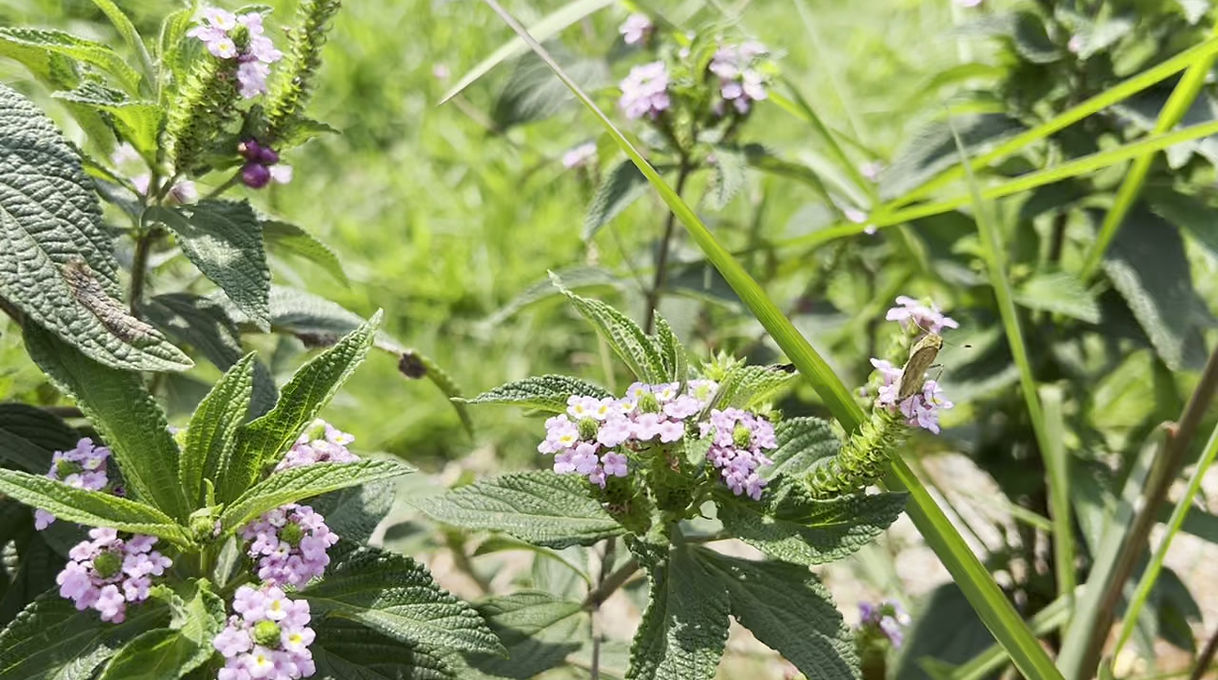
O sol pleno garante boas floradas para borboletas e abundante produção de frutos para os passarinhos.

É a lantana mais comum nos terrenos baldios da cidade. Típica planta ruderal que nasce entre frestas na calçada. sobrevive bem no meio da braquiária.

As frutas, diferente de outras Lantanas são mais ornamentais do que as flores, criando um movimento bonito, em contraste com o volume da planta.

Apesar da floração ser mais modesta, cria um desenho interessante que contrasta com outras lantanas. o tamanho final é menor do que a fucata, e a camara, em geral em torno de 1,80m.

Os pássaros se alimentam dos frutinhos e espalham as sementes, que germinam com facilidade, e a planta tem sido vista nos arredores do Cerrado Infinito.

As frutas sem dúvida são carismáticas, dá para comer, e tem um gosto adocicado sutil, mas apenas pela curiosidade, apesar da aparência psicodélica. não tem efeito nenhum.